Introduction 🌟
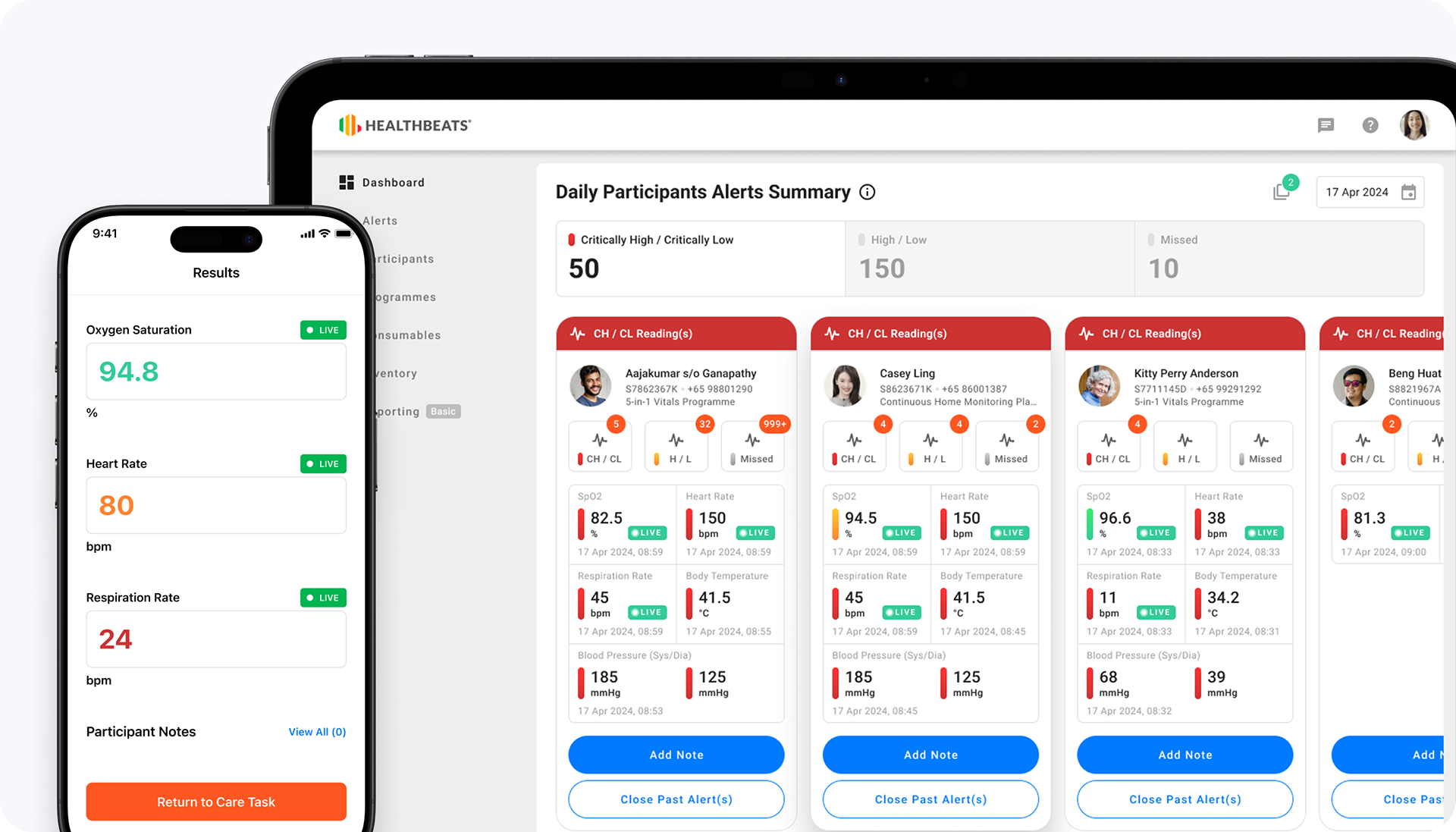
HealthBeats is a health technology company offering a Remote Vitals Monitoring (RVM) platform for hospitals and clinics. The platform enables healthcare providers to remotely monitor patients’ vital signs, supporting proactive and continuous care from the comfort of the patients’ homes.
Background
Continuous Monitoring tracks a patient’s health data and vital signs in real time using connected devices. This allows healthcare providers to detect changes or potential issues early and take timely action to improve patient outcomes.
There was an opportunity to extend continuous monitoring to web and mobile apps to:
There was an opportunity to extend continuous monitoring to web and mobile apps to:
• Enhance patient care by keeping patients engaged and informed about their health.
• Support early detection and treatment of potential health problems, reducing complications and hospital readmissions.
• Support early detection and treatment of potential health problems, reducing complications and hospital readmissions.
My Role 👩🏻💻
• Led the end-to-end design of the patient-facing mobile experience (iOS & Android) for the Continuous Monitoring solution.
• Collaborated with design team and align on provider-facing web platform to ensure a cohesive experience across patient and provider system.
• Designed and delivered a pioneering Continuous Monitoring solution for the Hospital-at-Home (HaH) within 9 months.
Impact 🚀
Patients: Easily take and manage live measurements while viewing their real-time vital signs. This provided a seamless and empowering experience that increased engagement and helped them better understand their health trends.
Providers: Monitored patient vitals in real time, using smart triaging and urgency-based organisation to prioritise care. Threshold alerts enabled timely interventions, improving clinical efficiency and supporting proactive patient management.
The Brief
To gain a deeper understanding of the challenges faced by patients and providers, we conducted user interviews to identify key pain points. We then mapped the end-to-end care journey, capturing the full process from hospital admission to post-discharge recovery at home for both patients and healthcare providers.
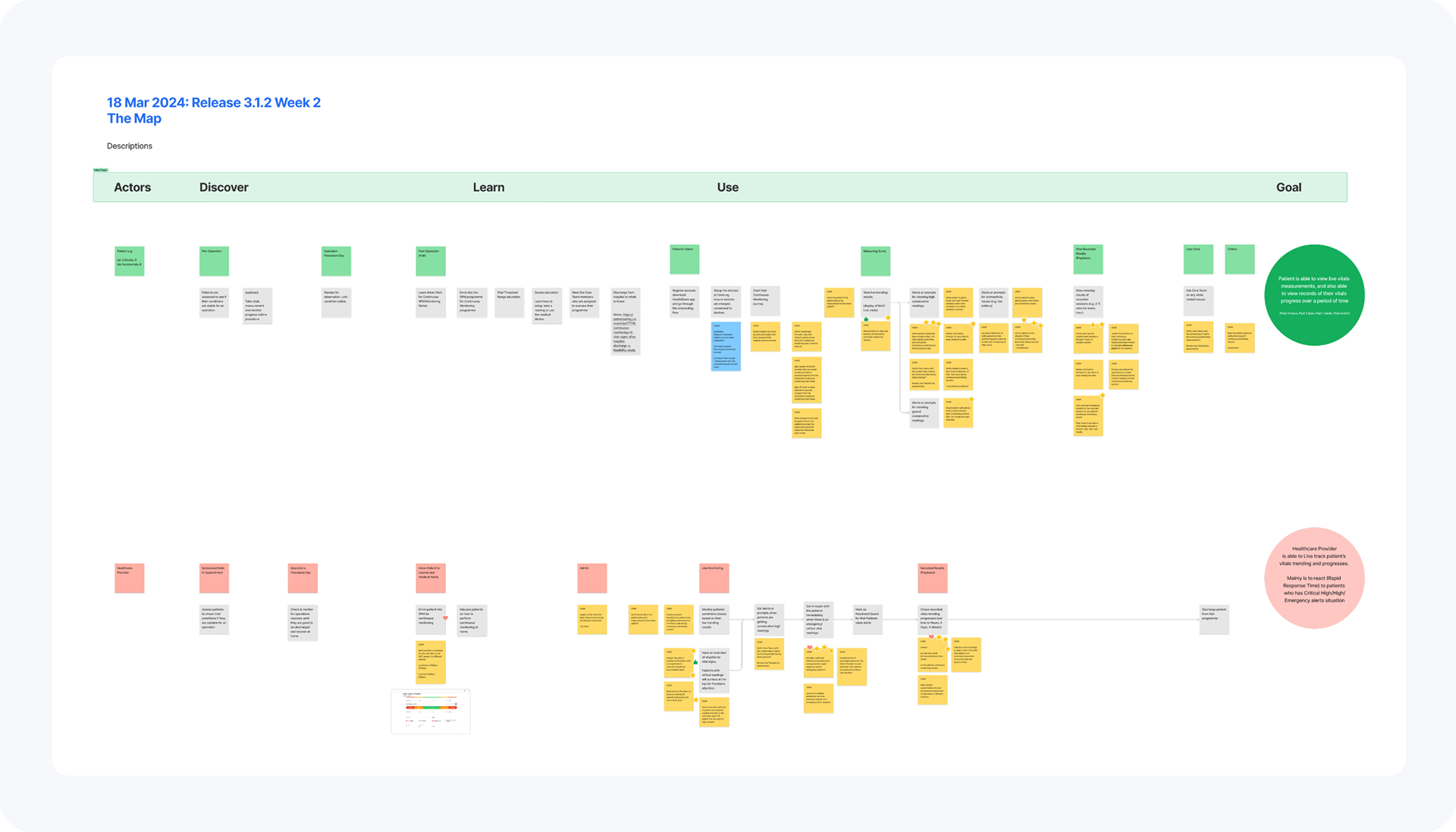
Mapping the full care journey highlighted challenges for patients and providers.
We found the following challenges:
Patient Challenges
• Anxiety about receiving hospital-level care at home
• Difficulty understanding escalation paths for worsening guidance
• Low digital literacy for remote monitoring apps
• Disruption to daily life
• Anxiety about receiving hospital-level care at home
• Difficulty understanding escalation paths for worsening guidance
• Low digital literacy for remote monitoring apps
• Disruption to daily life
Provider Challenges
•Fragmented vital signs and clinical data
• Alert fatigue from non-critical notifications
• Difficulty prioritising patients who need immediate attention
•Fragmented vital signs and clinical data
• Alert fatigue from non-critical notifications
• Difficulty prioritising patients who need immediate attention
From Ideas to Wireframes 💡
We conducted a design sprint to explore solutions for the Continuous Monitoring module. During the sprint, we brainstormed ideas, prioritised concepts and mapped key user flows for both patients and providers. Low-fidelity prototypes were created to test early concepts and were validated with stakeholders before progressing to high-fidelity designs.
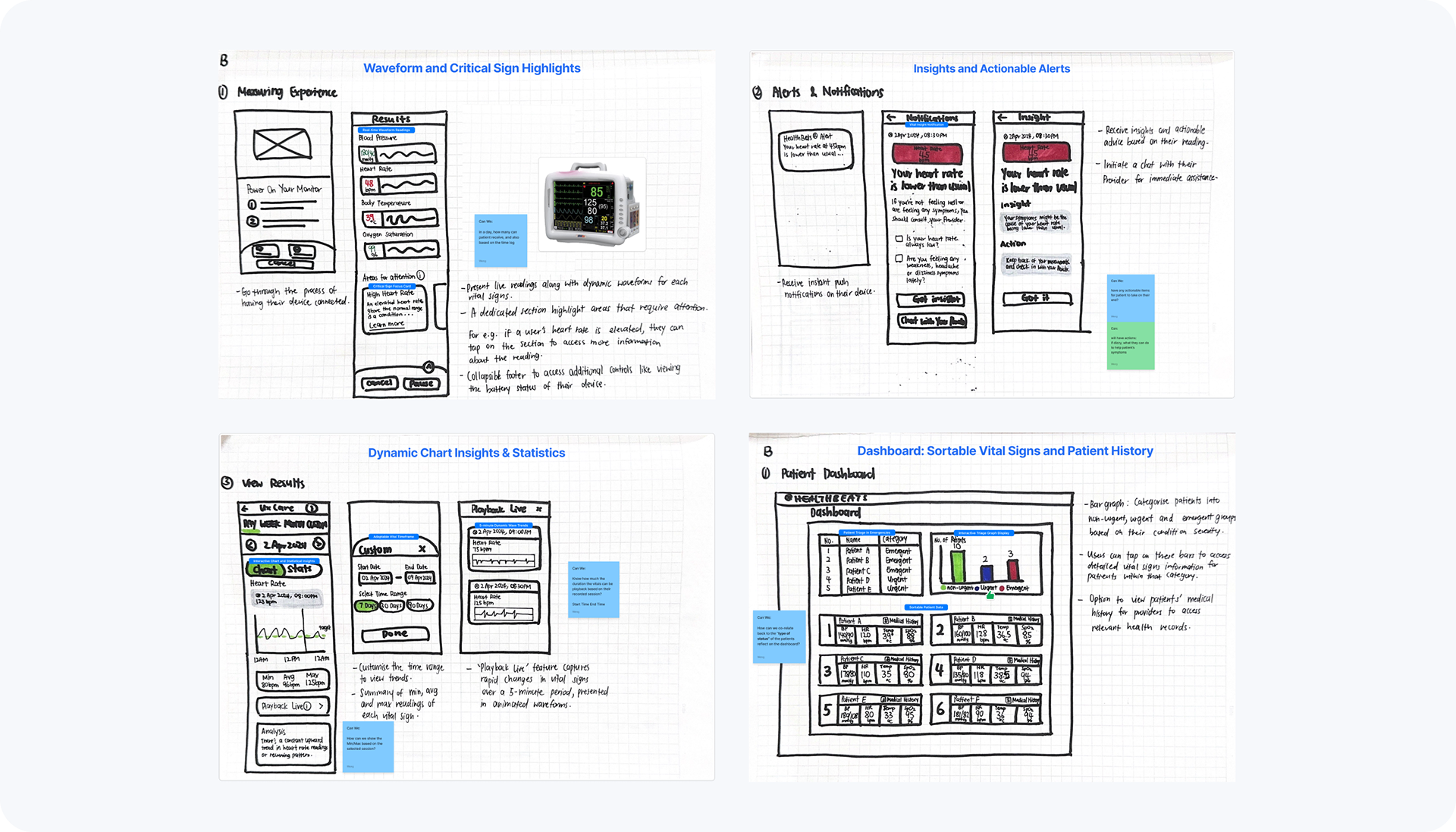
Wireframes guided by a design sprint with prioritised concepts and mapped user flows.
Designed with User in Mind
Based on insights gathered, we designed targeted features to address the specific needs of both patients and healthcare providers.
Patient Module
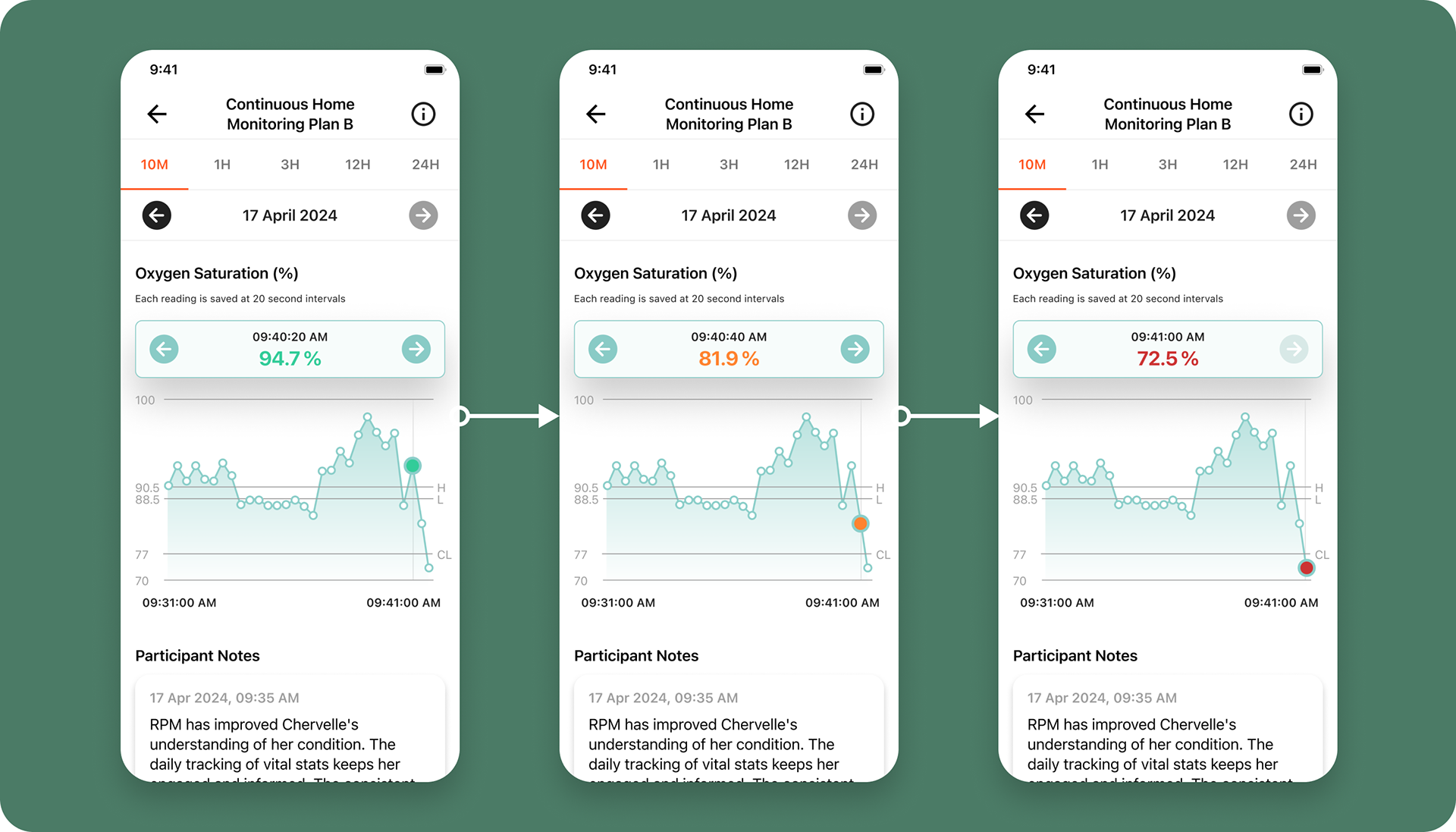
1. Continuous Data Display: Patients’ vital signs are monitored 24/7 by their care team, giving them confidence in their care and reducing the anxiety about being unattended at home.
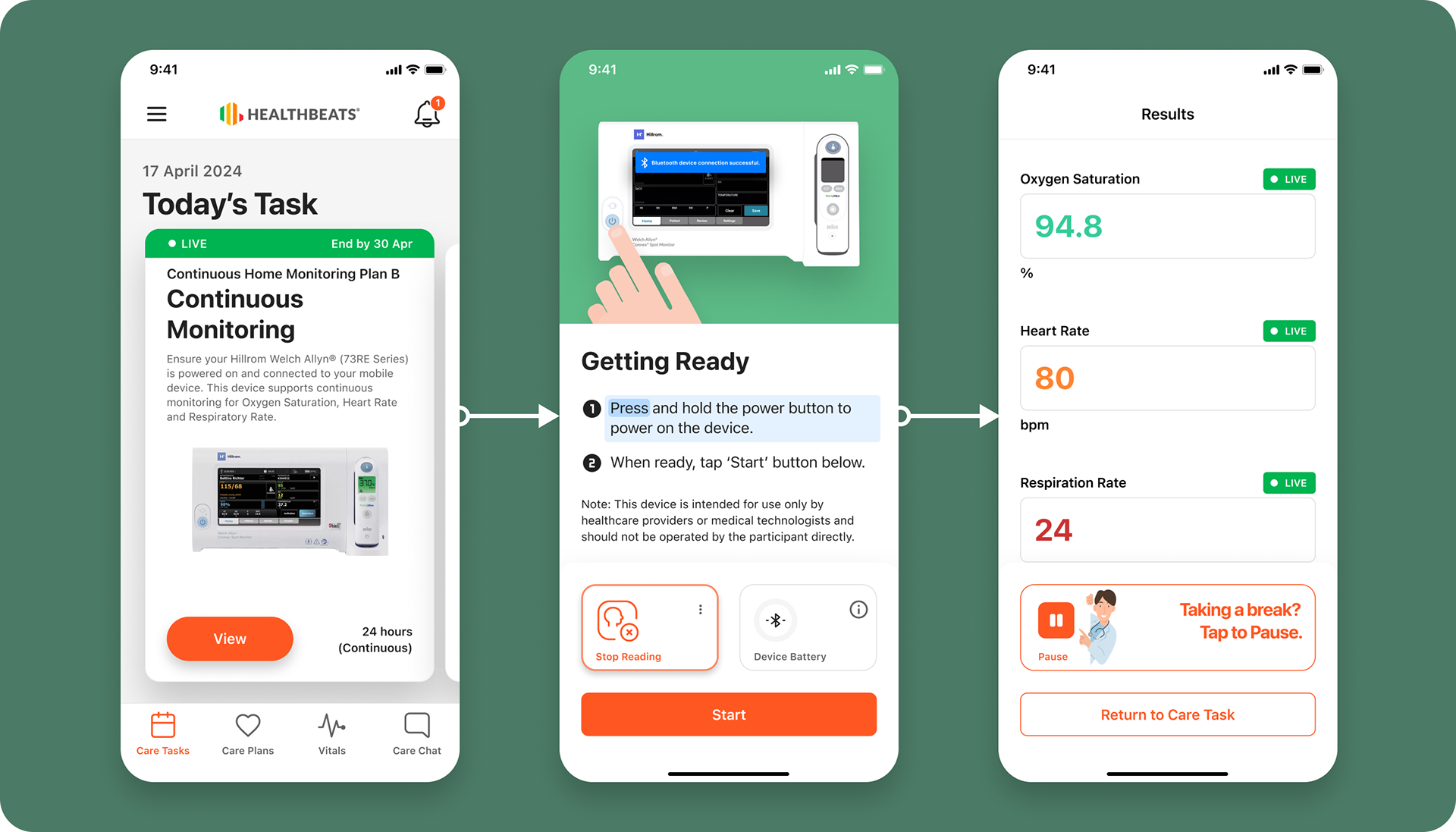
2. Vital Trends Visualisation: Real-time readings and historical trends are presented in a simple and easy-to-understand format, helping patients track their health and make sense of complex data, even with limited digital or medical experience.
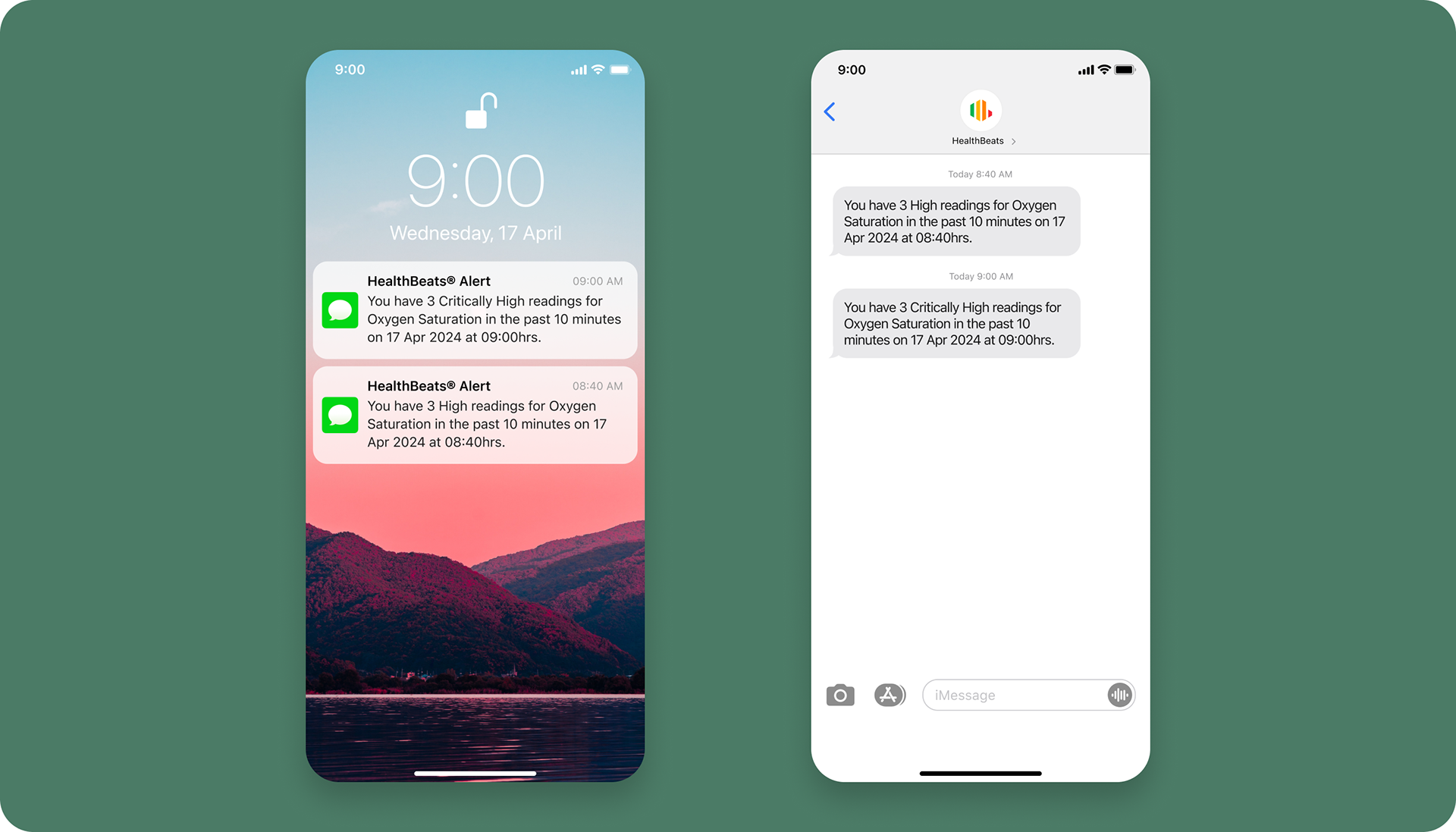
3. Live Alerts for Critical Results: Patients are notified when their vital signs stay at concerning levels over time, helping them stay aware of their condition and take action if necessary.
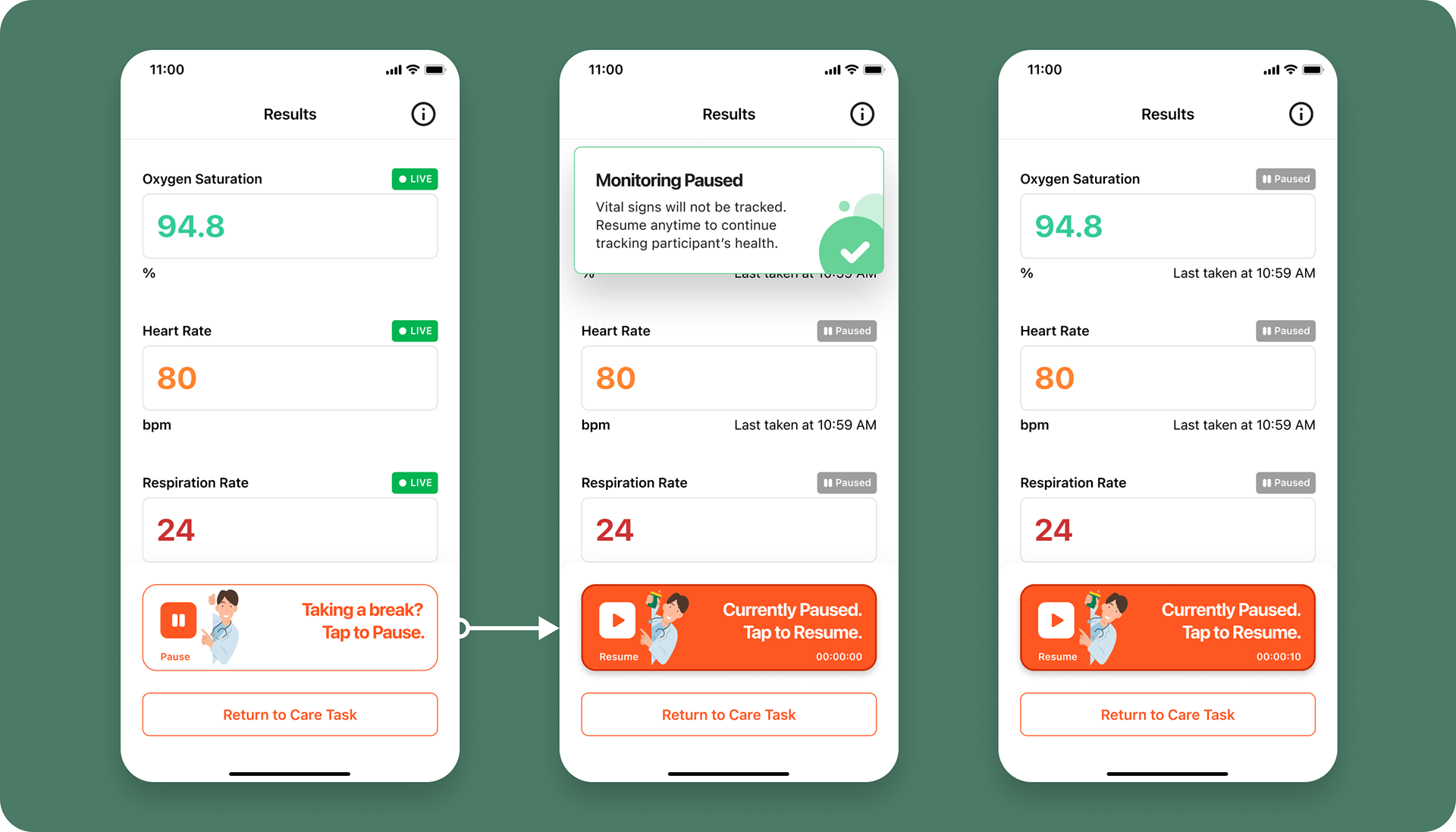
4. Pause & Resume Monitoring: Patients can temporarily pause and resume monitoring while the system tracks the duration, maintaining continuity of care without disrupting their daily routines.
Provider Module
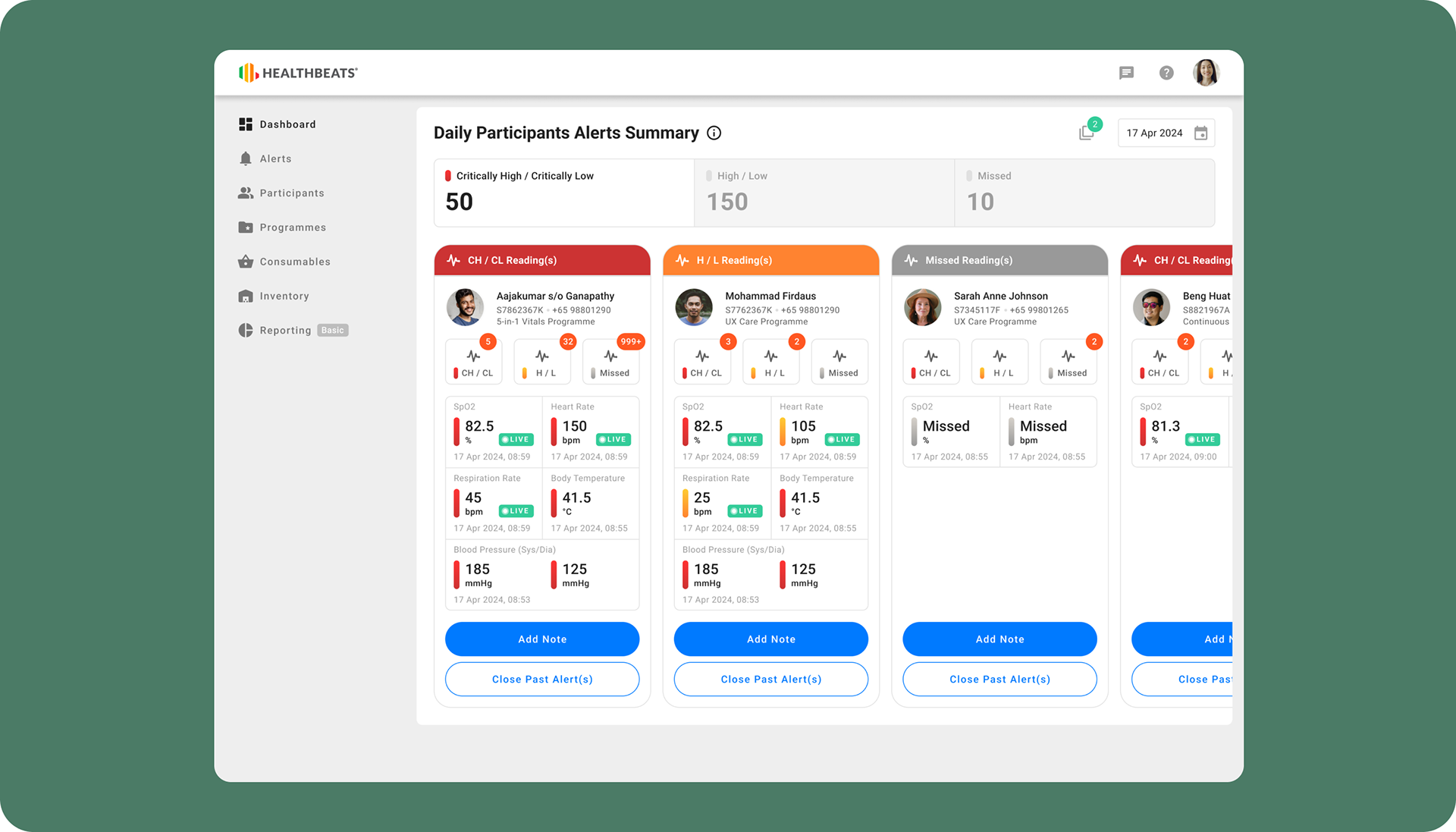
1. Monitor Patients' Progress on Dashboard: Clearly differentiates between spot and continuous monitoring, enabling clinicians to quickly identify and prioritise patients requiring immediate attention.
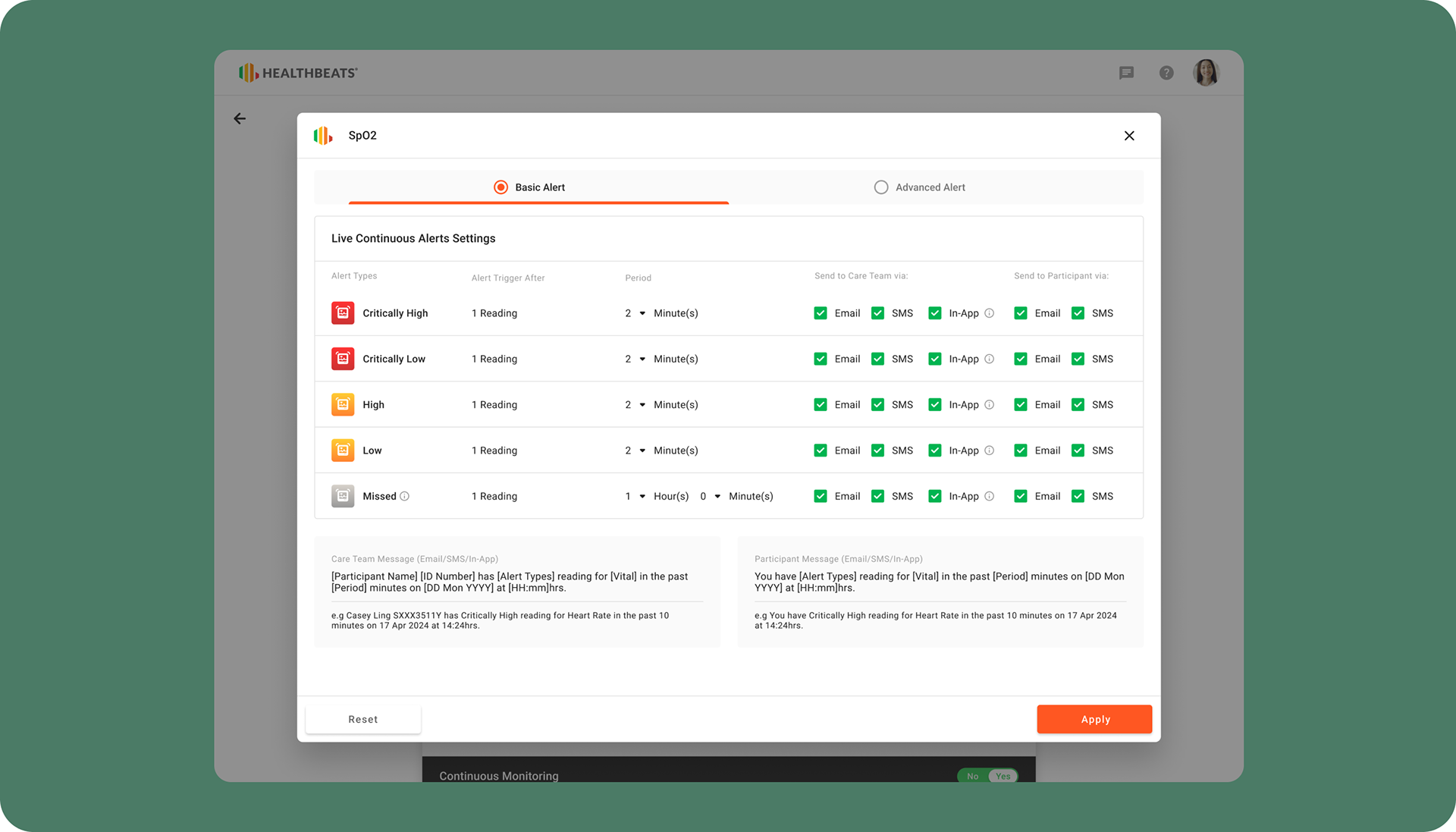
2. Configure Live Continuous Alerts: Allows clinicians to set threshold levels and notification timing, reducing cognitive load and supporting timely interventions.
Design Decisions
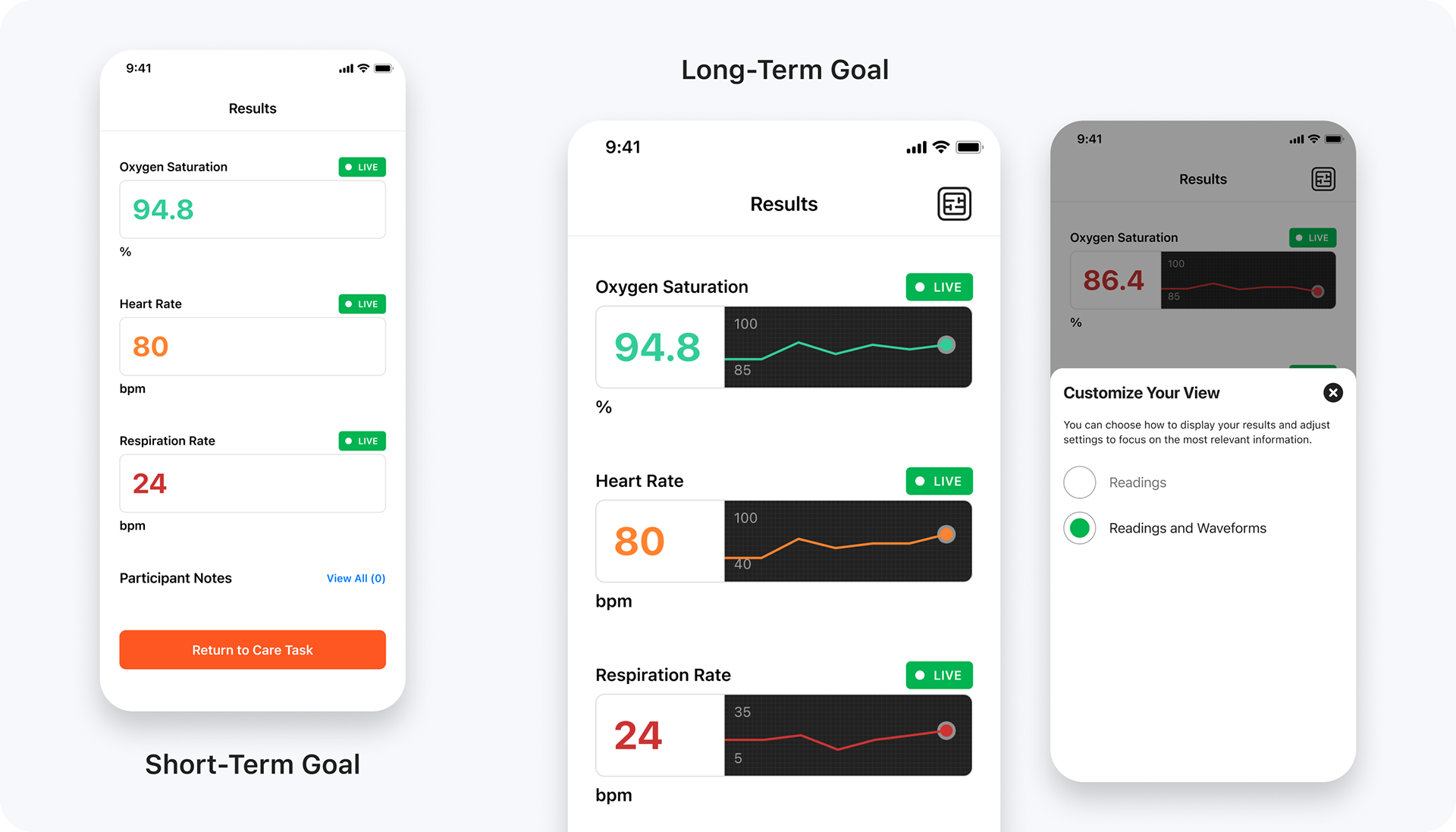
Throughout the design process, trade-offs were made to balance timelines and feasibility. For example, waveform-style charts were explored to help patients identify spikes and dips in their vitals but simpler trend charts (Minimum Viable Product) were prioritised to deliver a functional experience within the project timeline.
Given the complexity of the feature and the need to support gradual user adoption, an iterative release approach was chosen to gather feedback, validate assumptions and refine the experience over time. Waveform charts were planned as a future enhancement.
Outcome 🎉
The Continuous Monitoring module was successfully delivered over six development cycles, providing measurable improvements in patient engagement and provider workflow.
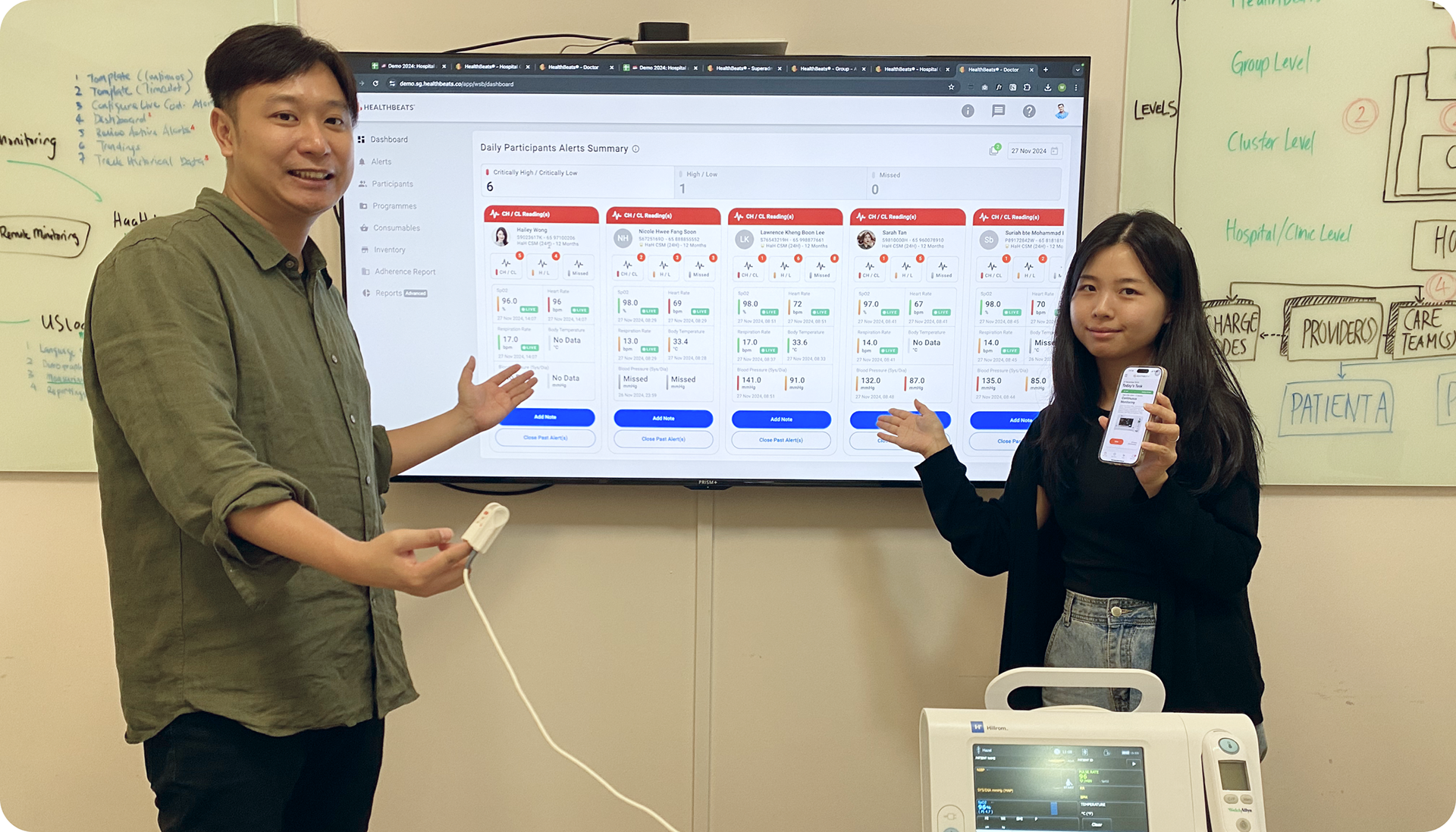
The project received strong recognition from Enterprise Singapore, who highlighted its potential to advance remote patient monitoring in Singapore. The solution’s success also generated interest in promoting the HealthBeats platform to public hospitals and the Ministry of Health, demonstrating its broader impact on the healthcare ecosystem.
Key Takeaways 📚
This project reinforced the value of phased design and development. Launching the module in phases as a minimum viable product allowed us to deliver value quickly, gather feedback and iteratively improve the experience.
As a completely new module, it involved a steep learning curve. Designing for next-generation continuous monitoring required extensive research, studying clinical workflows and reviewing best practices to ensure the solution met the needs of both patient and provider.